Section 232 started as a steel and aluminum action in early 2025. By late October 2026 it covers metals, autos, trucks, timber, semiconductors, pharmaceuticals, polysilicon, and drones, with more investigations open. A buyer asking “does a Section 232 duty apply to this part” now has to check several proclamations, each with its own rate, effective date, and exclusions.
This map is a starting point for that check, current as of October 25, 2026. Rates in the table come largely from law-firm and customs-broker trackers rather than from the proclamations themselves, and where sources conflict we say so. Confirm any rate against the proclamation and CBP guidance before you price against it.
The Actions in Force or Scheduled
| Product group | Rate and status | Key date | Notes |
|---|---|---|---|
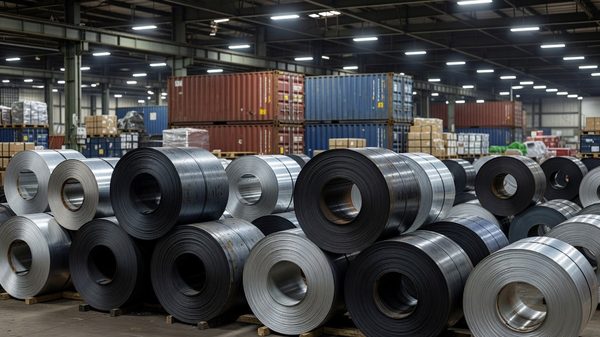
| Steel, aluminum, copper and derivatives | Tiered, roughly 25% to 50% by annex | Rebuilt April 6, 2026; tiers changed June 8, 2026 (Proclamation 11032) | Applies to full customs value; see our June 8 overhaul article |
| Autos and auto parts | 25% | In force since April and May 2025 | Special treatment for USMCA-compliant parts in the original action |
| Medium and heavy trucks, parts, buses | Reported 25% on vehicles and parts, 10% on buses | Reported November 1, 2025 | One tracker lists the status as scheduled with no date, so verify |
| Timber, lumber, derivatives | Softwood lumber 10%; upholstered furniture 25%; cabinets and vanities 25% | Increases to 30% (furniture) and 50% (cabinets, vanities) reported for January 1, 2027 | Some partners have lower negotiated rates |
| Advanced computing chips | 25% | January 15, 2026 (Proclamation 11002) | Narrow technical scope with broad exempt uses |
| Patented pharmaceuticals and ingredients | Up to 100% | July 31, 2026 for listed large companies; September 29, 2026 for all others | Reduced rates for some partners; generics excluded |
| Polysilicon and derivatives | 15% | December 4, 2026 | Reported August 6 proclamation; includes solar cells |
| Drones and components | 100% for larger and thermal-imaging units; 25% for 25 kg or less | Mostly September 3, 2026; some components February 9, 2027 | Proclamation 11055, August 13, 2026 |
Open Investigations and Negotiations
Not every action carries a duty. A proclamation dated October 22, 2026 on wind turbines orders Commerce and USTR to negotiate with trading partners and report within 180 days, without imposing new tariffs, per a customs-broker summary. The ICPA tracker, updated October 12, lists robotics and industrial machinery and personal protective and medical equipment as open investigations with no instrument, and critical minerals and aircraft and jet engines as under review. Trade advisers have said the administration signaled new actions on industrial machinery and robotics, but we found no confirmed date. If you buy machinery, this is the category to watch.
Reading the Table Without Making Three Common Mistakes
Mistake one: assuming origin settles it. Section 232 duties generally apply on a product basis, not a country-of-origin basis, with negotiated exceptions for specific partners such as the United Kingdom, the European Union, Japan, and South Korea. USMCA origin does not exempt metals, forest products, or copper from Section 232, per customs-advisory summaries. Our guide to USMCA’s review covers that boundary.
Mistake two: stacking duties that do not stack. The July 24, 2026 Section 301 forced-labor tariffs of 10% or 12.5% on 60 economies reportedly do not apply to goods already under Section 232. The Section 122 global 10% surcharge expired on July 24, and the Supreme Court ruled in February that the International Emergency Economic Powers Act (IEEPA) does not authorize tariffs, per the customs-advisory sources we reviewed. A buyer pricing a Section 232 product should not also add those layers without checking the notice.
Mistake three: treating Section 338 as settled. The 50% Section 338 action on certain Canadian goods overlaps metals in a way our sources disagree on. One tracker says goods under Section 232 are not subject to Section 338, while another says Section 338 applies to certain steel, aluminum, and copper goods from September 15, 2026. Until CBP guidance settles it for your line items, run both scenarios. Our Section 338 article covers the mechanics.
Conflicts We Could Not Resolve
Three points differ across sources. Trucks and buses: one trade publication gives rates and a November 2025 date while the ICPA tracker lists the action as scheduled. Pharmaceuticals: our earlier pharmaceutical article describes a 17-company cohort starting September 29, while other summaries put Annex III companies at July 31 and all others at September 29. And the metals rate structure is described as annex-based without a single published figure. For each, the proclamation annex and your customs broker are the authority.
A Working Method for Buyers
Start from the HTS code, not the product name. Check whether the code appears in a metals, auto, timber, semiconductor, or pharmaceutical annex, then in the pending list. Record the effective date next to the rate, because several actions step up on a fixed schedule, including timber on January 1, 2027, polysilicon on December 4, and drone components on February 9, 2027.
Then check the overlays: Section 301, Section 338 for Canadian goods, and any partner agreement. Finally, write the answer into the contract as a duty-allocation clause with a named responsible party and a notice period.
A map like this ages quickly. Treat the rates above as a checklist of questions for your broker, and re-run the check each time a new proclamation lands.
Sources: ICPA Section 232 tracker (updated October 12, 2026); C.H. Robinson tariff timeline; Covington Section 232 alert (April 2026); GHY and Crowell summaries of the pharmaceutical and semiconductor proclamations; customs-advisory summaries of the Section 301 and Section 122 actions. These are secondary summaries, not Federal Register or CBP text, and every rate should be verified against the proclamation.