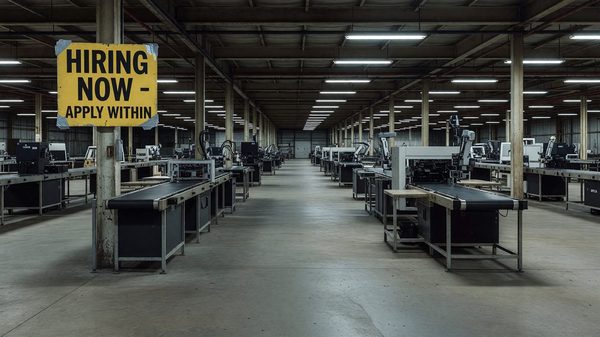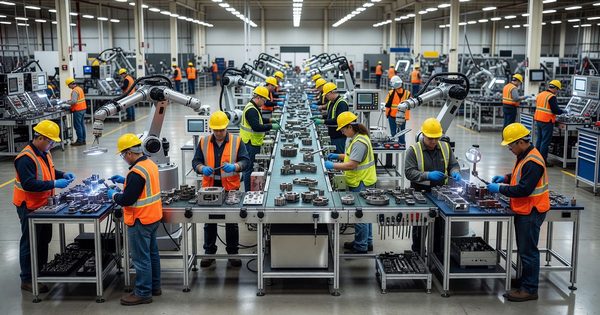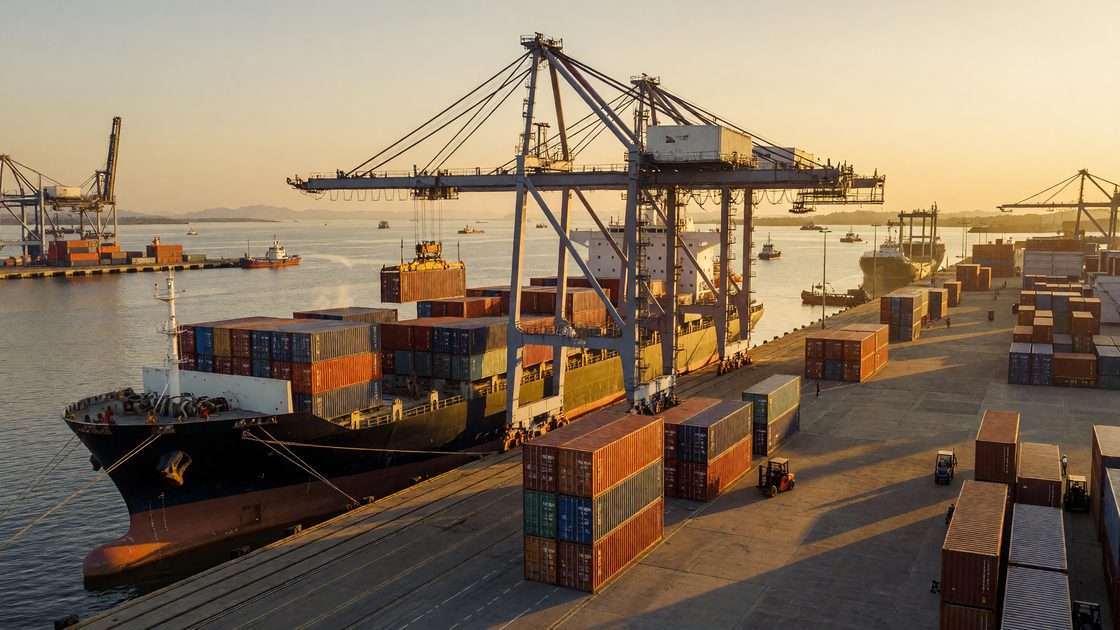
The reshoring narrative that dominates trade-policy coverage tells a simple story: tariffs make offshore production more expensive, so manufacturers bring production back to the United States. Actual trade and sourcing data tell a messier story, and the difference matters directly to any procurement team trying to anticipate where its supply base is actually headed. A meaningful share of production that has left China under tariff pressure has not landed in US factories — it has relocated to other manufacturing hubs across Asia and, to a lesser degree, nearshore locations in Latin America.
The Pattern Trade Data Actually Shows
Multiple trade-flow analyses tracking import composition since the escalation of US-China tariffs have found a consistent pattern: imports directly from China have declined meaningfully, while imports from other Asian manufacturing economies — countries positioned to absorb relocated production capacity — have risen by a comparable or larger magnitude over the same period. This is sometimes referred to as “tariff-driven relocation” or “China-plus-one” diversification, distinct from genuine reshoring, and industry and trade-research organizations have documented it as the dominant pattern rather than the exception.
The distinction matters because it changes what a tariff-exposure strategy should actually target. A sourcing team that assumes tariffs are driving suppliers back toward domestic capacity, and plans its supplier-diversification strategy around that assumption, is likely to be surprised when the realistic alternative suppliers available at competitive cost are located in a different overseas market rather than a US facility down the road.
It is also worth reading the trade data with some built-in skepticism, because a portion of the apparent shift can reflect rerouting rather than genuine relocation. Country-of-origin figures record where a shipment was last substantially transformed, not necessarily where the bulk of its value was added, so intermediate processing or transshipment through a third country before final import can make the headline decline in direct-from-China imports look larger than the amount of underlying production that has truly left Chinese supply chains. For a sourcing team the practical caution is to treat a rising import figure from an alternative market as a prompt to verify what is actually being manufactured there — new end-to-end capacity versus final assembly of largely Chinese-sourced components — rather than as automatic evidence that a resilient, independent supply base has appeared.
Why Production Relocated Sideways Instead of Coming Home
Several structural factors explain why tariff pressure has pushed production toward alternative overseas manufacturing hubs rather than domestic reshoring, and most of them are the same constraints that show up whenever a reshoring case is actually evaluated against realistic operating costs:
- Labor cost differential remains large even accounting for tariffs. Tariff rates, even at elevated levels, frequently do not close the total gap between US labor costs and labor costs in lower-wage manufacturing economies for labor-intensive product categories, meaning the tariff makes the offshore option somewhat more expensive without making the domestic option competitive on its own.
- Existing manufacturing infrastructure in alternative markets is already built out. Vietnam, and other Southeast Asian manufacturing economies in particular, have spent years building supplier ecosystems, component supply chains, and skilled assembly-line capacity specifically positioned to absorb relocating production — infrastructure that does not exist at comparable scale or speed in most US regions for the same product categories.
- US manufacturing capacity constraints (see the labor-availability discussion below) limit how fast domestic reshoring can actually happen even where a company genuinely wants to bring production home, meaning near-term relocation decisions default to wherever capacity is immediately available rather than waiting for domestic capacity to be built.
- Tariff policy has historically been treated by many manufacturers as a negotiable, potentially reversible cost of doing business rather than a permanent structural shift, which reduces the incentive to make the large capital commitment reshoring requires versus the comparatively smaller adjustment of shifting a supplier relationship to a different overseas country.
Taken together, these factors point to a pattern of least-resistance decision-making. Faced with tariff pressure, most manufacturers optimize for the fastest available way to preserve their existing cost structure and delivery commitments, and shifting a supplier relationship to an adjacent overseas market that already has proven capacity is almost always faster and less capital-intensive than standing up domestic production. Reshoring, in practice, does not compete against offshore sourcing in the abstract — it competes against a specific, readily available alternative that carries far lower switching costs and preserves margins the domestic option would compress. In most near-term decisions that alternative wins on exactly the operational grounds procurement teams are measured against: landed cost, time-to-first-shipment, and the risk of disrupting an existing qualified supply.
What This Means for a Sourcing Team’s Diversification Strategy
The practical implication for procurement is that “reducing China exposure” and “reshoring to the US” are not the same strategy, and treating them as interchangeable risks building a supplier-diversification plan around an assumption the data doesn’t support. A sourcing team genuinely trying to reduce China concentration risk should evaluate the realistic alternative supplier base directly, rather than assuming that alternative base is domestic by default:
- Map where comparable production has actually relocated for your specific product category, rather than assuming a uniform reshoring trend applies across all manufacturing categories. Relocation patterns differ significantly by product complexity, labor intensity, and existing supplier ecosystem maturity in each destination market.
- Evaluate alternative-market suppliers with the same rigor as a reshoring evaluation, including labor stability, quality-system maturity, and logistics lead time — a supplier that looks attractive purely because it’s not in China still needs the same due diligence as any new supplier relationship.
- Distinguish tariff-driven cost changes from genuine capability gaps when comparing a currently-used China supplier against an alternative-market option, since near-term landed-cost comparisons can shift again if trade policy changes, while underlying manufacturing capability and quality track record are more durable signals.
- Treat domestic reshoring as a longer-horizon option gated by the labor-availability constraint, not a near-term substitute for diversification decisions that need to happen on a shorter timeline.
None of this makes reshoring a poor long-term option; it makes it a decision with a different time horizon and a different set of gating constraints than a near-term diversification move. The teams that navigate this well tend to separate the two explicitly in their planning — treating overseas diversification as the answer to immediate concentration risk, and domestic reshoring as a parallel, longer-lead investment justified on its own merits. Those merits are often real but harder to quantify than tariff savings: supply-chain resilience against geopolitical disruption, tighter IP protection, shorter and more predictable lead times, and closer engineering collaboration between buyer and supplier. Framing reshoring around those durable advantages, rather than around headline tariff math that can reverse with the next policy cycle, tends to produce more defensible sourcing decisions than treating it as the automatic domestic answer to an offshore cost problem.
Reading Past the Reshoring Headline
The broader lesson for procurement teams is a familiar one applied to a new policy environment: headline narratives about where trade policy is pushing manufacturing tend to run ahead of what the underlying data actually shows, and a sourcing strategy built on the headline rather than the data risks missing where supply actually is available. Tariff policy has clearly changed sourcing economics — that part of the reshoring narrative is accurate — but the beneficiary of that change has been a more diversified set of overseas manufacturing hubs at least as much as it has been domestic US capacity, and a realistic sourcing strategy needs to account for both possibilities rather than assuming the more politically appealing one.
Frequently Asked Questions
Did tariffs actually cause a wave of US manufacturing reshoring? Trade data shows a more mixed picture than the reshoring narrative suggests. While tariff pressure has clearly reduced direct imports from China, much of that production appears to have relocated to other Asian manufacturing economies rather than returning to US facilities, reflecting persistent cost and capacity gaps that tariffs alone haven’t closed.
Where has production gone instead of the United States? Trade-flow analyses point to production relocating primarily to other established or emerging Asian manufacturing hubs that have built out supplier infrastructure specifically positioned to absorb capacity leaving China, with additional but comparatively smaller shifts toward Latin American nearshore locations.
Why hasn’t production come back to the US at the same rate? Several factors: the labor-cost gap between US and lower-wage manufacturing economies often persists even with tariffs added; alternative overseas markets already have supplier ecosystems built out; and US domestic manufacturing capacity is itself constrained by workforce availability, limiting how quickly reshoring could happen even where companies want to pursue it.
Should procurement teams still consider reshoring as part of a diversification strategy? Yes, but as one option among several rather than the default assumption. A realistic diversification strategy should evaluate alternative-market suppliers with the same due diligence as domestic reshoring options, since the data suggests overseas alternatives are often the faster, more immediately available path away from China concentration risk.
Is this relocation pattern likely to change? It depends heavily on the durability of current trade policy and on how quickly US domestic manufacturing capacity — particularly workforce availability — can expand. Absent a substantial shift in either factor, the current pattern of relocation to alternative overseas markets rather than broad-based domestic reshoring is likely to continue as the dominant trend.
Further Reading from Authoritative Sources
- US Census Bureau — Foreign Trade Statistics — Official US import/export data by country of origin, the primary source for tracking where production is actually relocating.
- Bureau of Labor Statistics — Manufacturing — BLS data on domestic manufacturing employment and capacity, relevant context for evaluating claims about US reshoring capacity.